
Rookie Roundup
Versatility adds early value


Thanks for reading the Her Hoop Stats newsletter. We’re excited to announce a new partnership with Hudl. Hudl’s industry-leading tools - Sportscode, Instat, and Fastmodel - elevate the preparation, performance, and player development of WNBA and NCAA teams. We appreciate their support and look forward to working with them to help bring more insight about the women’s game to you.
You can find me on Bluesky and HHS on Bluesky, Twitter, YouTube, Facebook, and Instagram.
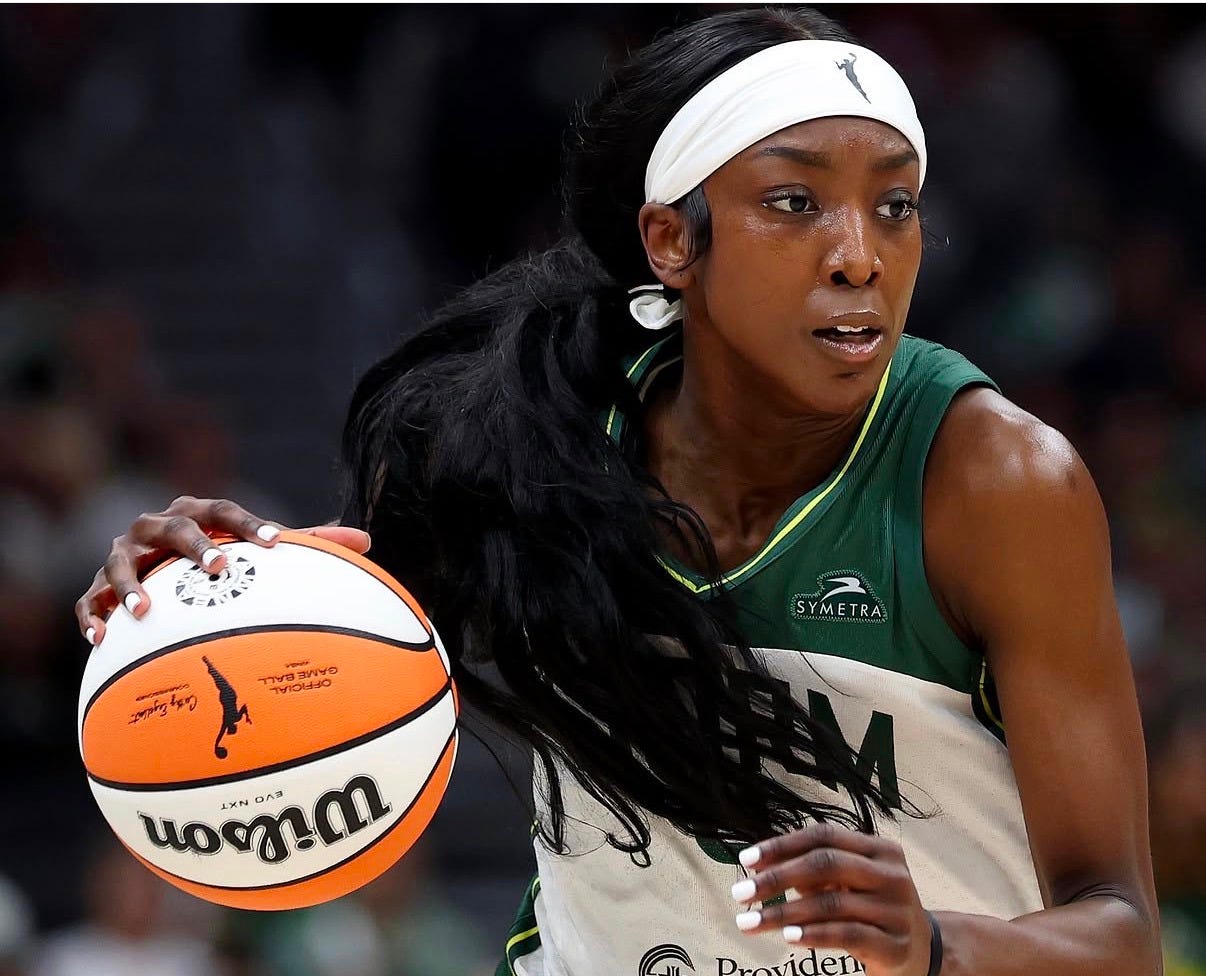
Adjusting to the WNBA often goes more smoothly for rookies who impact the game in multiple areas rather than heavily relying on one or two elite skills. The league’s pace, physicality, and talent level make it difficult for new players to consistently contribute once a primary strength of their game is taken away. Multifaceted players who score in a variety of ways, defend, rebound, and move well without the ball tend to earn playing time much more quickly. Below, we highlight a few players whose well-rounded games have not only eased their transition to the professional level but have also helped them find early success.
María Conde, Tempo
After being selected 27th overall by the Chicago Sky in 2019, then getting picked up by the Valkyries in last year’s expansion draft, the 6-foot-3 Spanish forward is finally playing stateside after landing a spot in Toronto. And her experience playing against top competition in Europe in the interim has helped her quickly become a steady plug-and-play contributor. Averaging 7.3 points, 4.1 rebounds, and 1.8 assists this season, Conde’s versatility on both ends of the court has been instrumental to her early success. Processing the game at a very high level, she makes timely cuts, delivers smart passes, and understands how to best fit alongside higher-usage teammates. On the defensive end, her size and toughness allow her to hold her own while guarding various positions within her team’s defensive schemes.
While expanding her off-the-dribble creation would add another dimension to her game, Conde’s ability to handle varying matchups, stretch the floor (37.5% on 3.7 3PA per game), and make winning plays within a team-orientated system already sets a relatively high floor as a rotational wing. If she can continue knocking down perimeter shots while maintaining her defensive grit and connective playmaking, she has all the tools to establish herself as a coveted role player who can seamlessly slot into almost any team’s lineup.
Azzi Fudd, Wings
The No. 1 draft pick may have started off her rookie season a tad slow by some accounts, but her play has trended upward since being inserted into the starting lineup. Averaging 15.8 points over the past eight games, Fudd has increasingly shown why she’s such a tough cover. Combining her elite off-ball movement with one of the quickest releases and purest shot forms, the gravity she creates from outside opens up the court for her teammates in a way that few others can. But she’s also proven to be anything but one-dimensional. The 5-foot-11 guard has tremendous strength, routinely loses defenders with her backdoor cuts, and even looks comfortable running point guard in a pinch. Defensively, she seems to have found a better balance of having active hands while limiting touch fouls and now leads her team in steals (1.2 spg).
With her top-tier talent, tremendous feel for the game, and relentless work ethic, Fudd has almost unlimited upside. If she can continue being more aggressive in hunting her shot, honing her offensive facilitation, and improving her finishing through contact, she could position herself as one of the league’s most impactful two-way guards.
Gabriela Jaquez, Sky
The recent national champion came into the league with some questioning her draft position as a lottery pick, but Jaquez quickly proved she more than belongs. Although a knee injury recently sidelined her for a handful of games, she averaged 11.5 points, 5.3 rebounds, and 1.2 assists through her first six outings and repeatedly showed she’s a classic glue player who contributes in countless ways. She can defend almost any perimeter assignment, keeps the ball moving, and does all the little things that don’t show up in the box score but impact a team’s success.
While Jaquez may never be the number one option or high-volume scorer, she significantly improved as a perimeter threat during her final college season and entered the league as a player capable of spacing the floor, attacking closeouts, and finishing efficiently around the basket. Defensively, her motor and off-ball awareness have also translated quickly, and she can complement almost any lineup. Because she doesn’t require the ball in her hands to impact games, she’s a natural fit alongside more dominant guards and will unquestionably continue to be a player many teams will want on their roster for years to come.
Flau’jae Johnson, Storm
The 5-foot-10 guard has long been known for her explosiveness, body control, and ability to get to the rim. Whether pushing the ball in transition, attacking off the bounce, or creating out of pick-and-roll actions, Johnson is constantly putting pressure on defenses, forcing them to collapse in the paint and make hurried help-side rotations. And even when her shot doesn’t fall, she often earns a trip to the free-throw line and connects at a high rate (84.2% on 3.8 FTA per game). Scoring in double-digits in nine of her 15 games, including a recent 14-point, 12-rebound double-double against the Sparks, Johnson’s knack for generating points without needing a specific offensive structure has made her adjustment to the professional level much easier.
Beyond her downhill scoring ability, another factor keeping Johnson on the floor has been her defensive competitiveness. With her size, athleticism, and unrelenting mentality, she’s able to stick with quicker and more physical perimeter players, and she appears to embrace difficult assignments. As Johnson continues to elevate her game, the biggest areas for growth will be honing her decision-making and improving overall offensive efficiency. Sometimes, she forces drives or relies too heavily on difficult shot creation. If she continues to work on refining her reads and recognizing secondary defenders, she’ll become a much more complete playmaker who has a long and successful career ahead of her.
Laura Juškaitė, Tempo
As Toronto’s frontcourt dealt with multiple injuries to open the season, Juškaitė capitalized on the opportunity and quickly emerged as one of the more pleasant surprises among this year’s rookie class. Recently posting a team-high 19 points along with 2 rebounds, 4 assists, and 3 steals against the Fever, the 28-year-old Lithuanian has built a reputation as a versatile, do-everything forward whose combination of size, strength, and determination allows her to impact winning in many ways. At 6-foot-4, she brings a physical presence and steadfast mentality that helps her to compete on the glass, stifle defensive assignments, and create extra possessions through effort and hustle plays. Offensively, she also serves as a floor spacer (38.5% on 2.6 3PA per game) who’s effective in transition and makes quick, efficient decisions when defenses shift or rotate.
Juškaitė’s long-term trajectory centers on continuing to maximize that versatility while expanding her offensive creation skills. To take her game to the next level, she needs to become more assertive in attacking closeouts, generating offense off the dribble, and turning mismatches into scoring opportunities. But if she keeps growing as an offensive threat while maintaining her physicality, defensive flexibility, and endless motor that helped define her early success, Juškaitė has the building blocks to carve out a lasting role in the league as high-demand athletic stretch-forward.
Cotie McMahon, Mystics
Moving to the guard position for her last season of college basketball expanded McMahon’s skill set in ways that have proven extremely valuable early in her professional career. The 6-foot wing now blurs positional lines and has shown the flexibility to push the ball in transition, finish through traffic in the half court, and defend both frontcourt and perimeter matchups. Often overwhelming opponents with her strength and athleticism, she’s averaging 6.6 points, 2.4 rebounds, and 1.6 assists off the bench.
Even when her scoring opportunities fluctuate, McMahon finds ways to affect winning through rebounding and making hustle plays to keep possessions alive. To unlock her long-term ceiling, she needs to continue enhancing her decision-making as a secondary creator and become a more consistent 3-point threat. But if McMahon keeps adding to the guard skills she’s already developed while maintaining the toughness and physicality that have defined her game, she could mature into an invaluable two-way piece that’s a mainstay in the WNBA.
Sydney Taylor, Sky
Posting a career-high 30 points in her most recent game against the Fever and becoming one of two rookies who’ve already racked up two 25-point games, the 5-foot-9 Louisville alum has proven to be a dynamic spark off the bench for Chicago. Loaded with confidence, a quick first step, and a score-first mentality, Taylor becomes an offensive threat the minute she steps on the floor, taking advantage of any sliver of an opening to get the ball in the hoop. Assertive around the perimeter, undeterred by any paint presence, and solid at the free-throw line, once her shots start falling, she often draws two defenders and frees up more space for her teammates. She’s also shown she can function as a secondary ball-handler, and her competitive energy has allowed her to remain impactful even when her scoring is limited.
Longer term, Taylor’s future success depends on continuing to expand her game beyond getting to the rim. Improving her consistency from beyond the arc (24.5% on 4.5 3PA), honing her playmaking abilities, and becoming more consistent as a point-of-attack defender will be critical. While her scoring prowess will likely continue to anchor her value, if Taylor can continue developing as a facilitator and defender while improving her floor-spacing ability, she could establish herself as the type of versatile backcourt contributor who adds tremendous value to almost any team.
In a league where roster spots and minutes are hard to earn, especially for rookies, the ability to contribute across multiple facets of the game often provides the quickest route to staying on the floor. As these first-year players continue to build on their individual strengths, it will be exciting to see how their well-rounded foundations help them become even more impactful as the season progresses.
Thanks for reading the Her Hoop Stats Newsletter. If you like our work, be sure to check out our stats site, our podcast, and our social media accounts. You can find me on Bluesky and HHS on Bluesky, Twitter, YouTube, Facebook, and Instagram.